Product Description
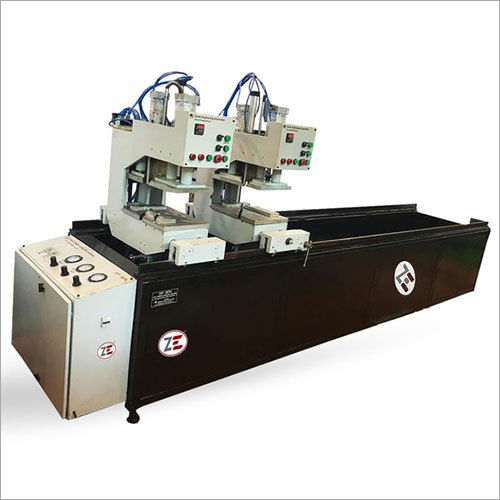
UPVC Window Making Machine
The windows and doors made from UPVC (unplasticized polyvinyl chloride) are quickly substituting the windows and doors made from aluminium globally. Not only because these are cost-effective, but also easier to maintain. The UPVC windows are light in weight and can last for over 15 years in a good condition. The UPVC window profiles and other profiles can be made on a UPVC window making machine. This machine employs PVC (polyvinyl chloride) and other types of plastic as a raw material. The light in weight, flexible, high strength, salt erosion resistant and rot resistant windows can be produced in different sizes, with acoustic insulation, and in designs, like open-able tilt and turn. In a day, 5000 UPVC windows can be produced using this UPVC window making machine. The high speed machine ensures energy efficiency and good performance. The profiles developed have good surface and stability against light and heat.
Specifications:
|
Height
|
2000 mm
|
|
Brand
|
Zenith
|
|
Power Consumption
|
6 HP
|
|
Production Capacity
|
20 -50 Windows Per Day
|
|
Machine Type
|
Automatic
|
|
Voltage
|
380 V
|
|
Frequency
|
50 Hz
|
|
Power
|
Three Phase
|
|
Country of Origin
|
Made in India
|
|
Width
|
1500 mm
|
|
Machine Weight
|
1550 Kg
|
|
Length
|
5800 mm
|
Advanced Automatic OperationThis machine offers automatic-grade operation, streamlining the window fabrication process. Its Frequency Speed Control system provides consistent performance, allowing users to maintain steady productivity without frequent manual adjustments, making it a practical choice for businesses looking to upgrade their production line.
Efficient Material ProcessingCrafted specifically for UPVC material, the machine ensures precision in shaping and assembling window frames. The automatic controls and tailored design maximize output while minimizing material waste, resulting in high-quality products and improved cost-efficiency for manufacturers and suppliers.
Versatile Applications across Business ModelsSuitable for dealers, exporters, manufacturers, and retailers, this UPVC window making machine adapts to various business requirements. Its reliable operation and moderate size facilitate easy installation in different settings, empowering businesses throughout India to meet market demands rapidly.
FAQ's of UPVC Window Making Machine:
Q: How does the UPVC Window Making Machine improve window fabrication for businesses in India?
A: The machine automates the cutting and assembling of UPVC window profiles, reducing manual intervention and increasing production speed. Its Frequency Speed Control system allows for consistent, high-quality output suitable for dealers, fabricators, and manufacturers operating within the Indian market.
Q: What type of control system does the machine use during processing?
A: The UPVC Window Making Machine is equipped with Frequency Speed Control, enabling users to manage operational speed automatically. This ensures precision during window fabrication while eliminating the need for computerized operation.
Q: Where can this UPVC window making machine be installed or used?
A: With compact dimensions of 350*750*450 mm and a weight of 325 kg, the machine is easily installed in small to large workshops, manufacturing units, retailer facilities, and fabrication centers throughout India.
Q: What is the process required to operate the UPVC Window Making Machine?
A: Users need to set up the machine, connect it to a 330-volt power supply, and load UPVC profiles. Operation is straightforward due to its automatic controls-set your desired speed with Frequency Speed Control and initiate the processing sequence.
Q: What are the main benefits of using an automatic UPVC window making machine?
A: Key benefits include higher productivity, reduced material wastage, greater consistency in finished products, and minimal operator training requirements. The automatic system supports business scalability and reliable output quality.
Q: When is the recommended maintenance schedule for this machine and what warranty is provided?
A: Routine maintenance should be completed per manufacturer guidelines, typically every few months. The product comes with a one-year warranty covering manufacturing defects and operational reliability.
Technical Details 





 Send Inquiry
 Send Inquiry
 Send SMS



